Dunrite Chimney and Stove: Chimney Inspection Services in Saint James, NY

At Dunrite Chimney and Stove, we take pride in keeping Saint James homes safer, warmer, and more beautiful by providing comprehensive chimney inspections designed to protect your home and family. Whether you use your fireplace daily through the colder months or only occasionally, regular chimney inspections are essential for identifying early signs of wear, blockages, or structural concerns before they become costly or dangerous problems.

Our certified technicians use advanced tools and camera systems to evaluate every part of your chimney, from the firebox and damper to the flue and crown, ensuring it’s operating as efficiently and safely as possible. We’ve built our reputation in Saint James on honest assessments, expert recommendations, and dependable service that homeowners can trust season after season.

Why Can’t I Skip an Annual Chimney Inspection?

Many homeowners assume that if their fireplace looks fine on the outside, everything inside must be fine too. Unfortunately, hidden dangers often lie within the flue system. During an inspection, we look for:

  • Creosote buildup that can lead to chimney fires

  • Cracked flue liners or missing mortar joints that allow heat and gases to escape

  • Obstructions like bird nests, leaves, or debris that restrict airflow

  • Water damage caused by deteriorated flashing, caps, or crowns

  • Signs of foundation shifting or structural movement that could affect stability

A yearly inspection allows us to catch problems early, preventing small cracks from expanding, leaks from worsening, and creosote from building to dangerous levels. Many homeowners are surprised by how quickly unseen damage can escalate. In fact, just one season of unchecked moisture or freeze/thaw weathering can cause serious deterioration inside the flue.
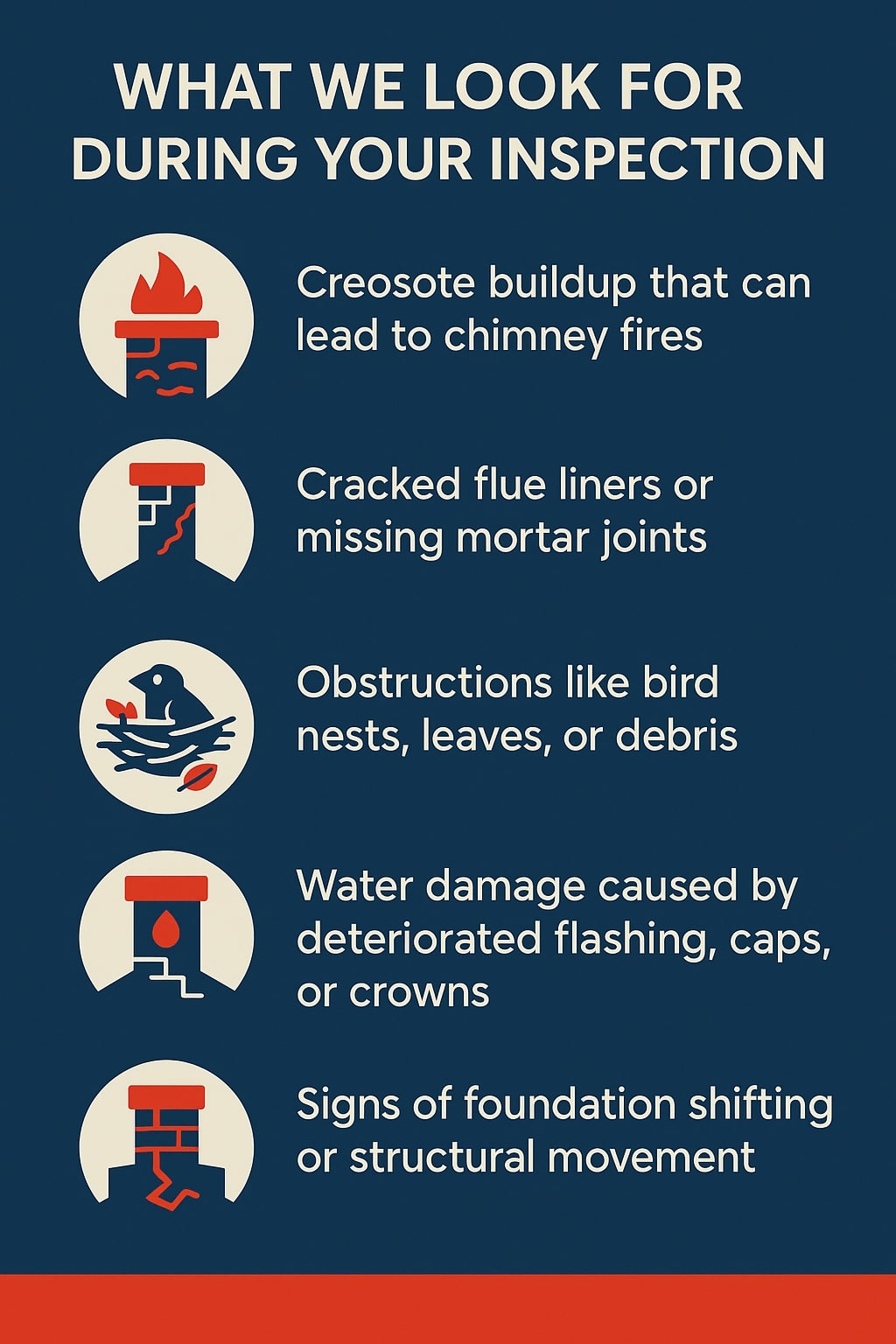
original infographic with a dark blue background and cream text titled “WHAT WE LOOK FOR DURING YOUR INSPECTION,” featuring five circular icons on the left, each paired with text on the right. The first icon shows a chimney with a red flame for “Creosote buildup that can lead to chimney fires.” The second depicts a cracked chimney for “Cracked flue liners or missing mortar joints.” The third shows a bird in a nest with a leaf for “Obstructions like bird nests, leaves, or debris.” The fourth displays a chimney with a red water droplet for “Water damage caused by deteriorated flashing, caps, or crowns.” The fifth shows a chimney with a cracked base for “Signs of foundation shifting or structural movement.” The design uses red, cream, and dark blue for contrast and clarity.

We Love Serving You: About Saint James, NY

Saint James, located in the Town of Smithtown on Long Island’s North Shore, is a charming community known for its rich history, beautiful tree-lined neighborhoods, and small-town warmth. Residents enjoy spots like the Deepwells Farm Historical Society, Mills Pond Gallery, and nearby Avalon Nature Preserve. The village’s mix of historic homes and newer properties makes it a unique area to serve, and we’re proud to help preserve the comfort and character of these homes through expert chimney care.

What Are the Different Levels of Chimney Inspections?

The Chimney Safety Institute of America (CSIA) defines three levels of chimney inspections, and each serves a different purpose:

  • Level 1 Inspection: A basic visual check for homeowners who use their system regularly without recent changes. We assess accessible areas of the chimney, fireplace, and connection points to confirm proper operation and ventilation.
  • Level 2 Inspection: Required when selling a home, changing fuel types, or after severe weather or chimney fire. We use video cameras to examine interior flue surfaces and joints to identify cracks, gaps, or concealed damage.
  • Level 3 Inspection: The most in-depth inspection, recommended when serious issues are suspected. It may require opening parts of the chimney structure or walls to fully assess hidden areas of concern.

We help homeowners determine which level they need and provide detailed reports, photos, and repair recommendations to guide the next steps.

How Can Weather in Saint James, NY Affect My Chimney?

Long Island’s weather patterns can be hard on chimneys. Between humid summers, snowy winters, and frequent freeze/thaw cycles, masonry can absorb moisture, expand, and crack. Salt air from the coast can also accelerate corrosion in metal components like flashing and dampers.

Heavy rainfall and coastal storms can loosen mortar or cause water to seep through small cracks, leading to internal decay. Even mild winter thawing can allow water to refreeze inside bricks, causing spalling or flaking. Over time, this cycle can weaken structural integrity and allow leaks into ceilings and walls near the fireplace.

To combat this, we often recommend waterproofing treatments, crown repair, and flashing resealing as preventive measures following an inspection. Addressing these issues early keeps your system drier and stronger through the seasons.

Could Earthquakes or Settling Cause Dangerous Flue Gaps?

While seismic activity in Long Island is relatively mild, natural settling or minor ground movement can still create hairline cracks or misaligned joints inside a chimney flue. These small shifts may go unnoticed until they start affecting draft performance or allowing gases like carbon monoxide to leak into the home.

Our video inspection tools let us detect even microscopic separations that the naked eye can’t see. Catching these early prevents dangerous leaks and helps ensure your chimney draft performs properly.

How Fast Can Crumbling Mortar Compromise Chimney Stability?

Moisture, acid from combustion, and seasonal temperature changes can cause mortar joints to weaken quickly…sometimes within a single season. Once mortar begins to crumble, nearby bricks lose support, creating a chain reaction of instability. This can lead to leaning or cracking that worsens with each freeze–thaw cycle.

If your chimney shows flaking mortar, spalling bricks, or visible cracks, an inspection is crucial before further deterioration occurs. We provide tuckpointing and masonry repair to restore structural strength and prevent more serious collapse risks.

What Should Homeowners Do Before Using Their Fireplace After a Storm or Flood?

After heavy rain, flooding, or a coastal storm, it’s important not to light a fire until the chimney has been professionally inspected. Water intrusion can damage liners, rust dampers, or saturate insulation, all of which can cause drafting problems or safety hazards.

Our post-storm inspections include moisture detection, liner checks, and verification that the flue and cap are clear of debris. Even if your chimney looks intact, hidden water damage can significantly impact its performance and safety.

Schedule Your Saint James, NY Chimney Inspection Today

At Dunrite Chimney and Stove, we’re proud to serve Saint James with the thorough, detail-oriented inspections homeowners deserve. Whether you live in a historic colonial or a modern build, our team ensures your chimney stays clean, sound, and ready for another season of warmth.

Call us today to schedule your chimney inspection or to learn more about our repair, sweeping, and waterproofing services. Let our family-owned business help keep your home comfortable and your chimney in top condition year-round.

Close ✕

Product Type

Fuel Type

Design Style

Brand